
Most sidewalk problems start underneath, which explains why so many surface fixes fail since these issues are easy to miss. When addressed early, sidewalk leveling can remove trip hazards and bring your slab back into proper slope without having to tear it out.
Common Sidewalk Leveling Hazards and What Causes Them
Sidewalk problems usually follow a pattern where small surface issues appear first, and structural movement shows up later. The hazards below are listed from least serious to most serious.
Light Water Staining or Minor Puddling
This is the first warning sign that something is changing. Water should not sit on concrete, and when it does, the slope has started to shift, which leads to soil loss below the slab.
- Cause: Surface wear or a slight slope change
- Solution: Surface grinding or drainage adjustments
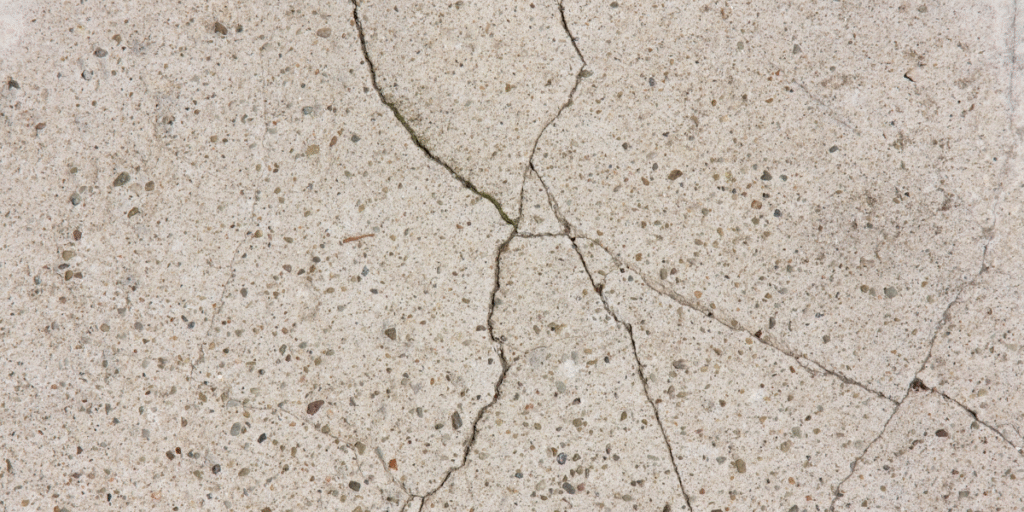
Hairline Surface Cracks
Most sidewalks develop small cracks over time, and by themselves they are not a big issue. Trouble starts when water moves through them and reaches the soil below.
- Cause: Normal concrete shrinkage or light surface stress
- Solution: Crack sealing or flexible joint filler
Open Expansion Joints
Expansion joints are meant to move, but once the joint material breaks down gaps open and water follows the easiest path downward.
- Cause: Aging joint material or repeated slab movement
- Solution: Joint cleaning and resealing
Chipped Edges or Small Spalls
Spalling starts at the surface and works deeper. After the top layer breaks off, the concrete underneath wears faster.
- Cause: Impact damage, surface wear, or moisture intrusion
- Solution: Concrete patching or surface repair
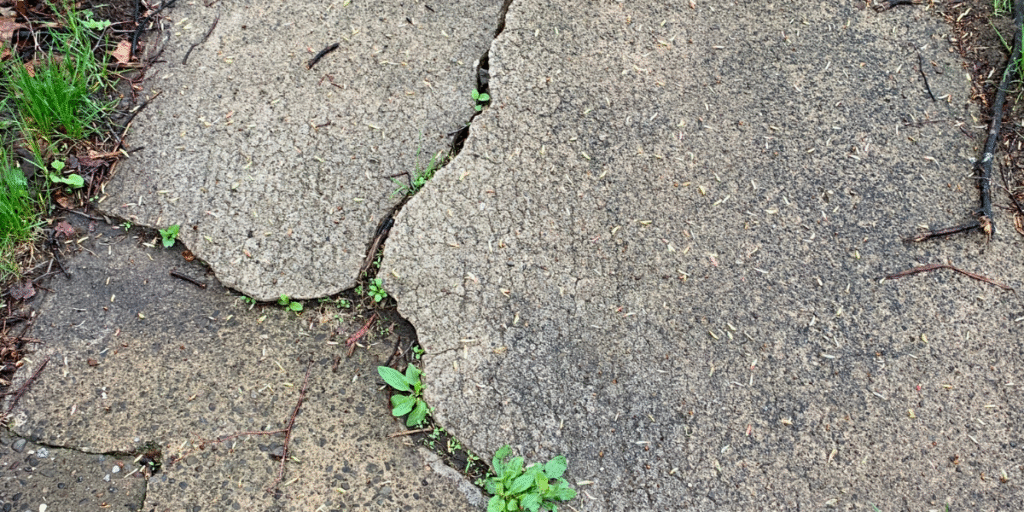
Raised or Uneven Sidewalk Slabs
This is where safety can become a real concern: one slab sits higher than the next and creates a trip hazard, and in many cases the slab next to it has settled.
- Cause: Soil erosion, poor compaction, or nearby tree root growth
- Solution: Sidewalk leveling with polyurethane foam
Tilted or Sloped Slabs
A slab that leans to one side points to uneven soil support and changes how water moves across the surface, which can make the problem worse over time.
- Cause: Uneven soil support or drainage problems
- Solution: Precision leveling to correct the slope
Sunken Sidewalk Sections
Sunken slabs are usually tied to ongoing soil loss. These sections rarely stay the same and continue to drop, which makes the height change more noticeable over time.
- Cause: Washout from water intrusion or settling soil
- Solution: Foam lifting to stabilize the soil and raise the slab
City Code and HOA Requirements
City sidewalk rules are mainly focused on safety, and most violations come down to trip hazards rather than appearance. Cities might flag things such as:
- Height differences around ½ inch or more between slabs
- Gaps near ¾ inch or wider at joints
- Holes or depressions that can catch a foot
- Slopes that affect walking or water flow
Drainage and traction also come into play. Sidewalks are expected to shed water and stay stable under foot traffic, and small puddles can still cause problems if they lead to ice, erosion, or more settlement.
Repairs are reviewed based on the cause of the issue. Open joints may allow sealing, while uneven or settled slabs usually need lifting/replacement, and surface patching is rejected because it leaves the soil problem untouched.
Replacing slabs requires permits and inspections. When allowed, sidewalk leveling is used because it restores alignment without demolition and limits downtime. HOAs follow the same safety rules and may add appearance standards.
5 Sidewalk Leveling Methods
There are a few different sidewalk repair methods. The right one for you depends on why the concrete moved and how much it settled.
1. Surface Grinding
Grinding shaves down the higher edge of a slab. It can reduce small height differences, but it does nothing for soil problems below.
- Best For: Very small height differences
- Limits: Does not stop future movement
2. Joint Filling and Sealing
Sealing joints blocks water from reaching the soil, which slows erosion but does not lift a settled slab.
- Best For: Maintenance and water control
- Limits: No change to slab height
3. Mudjacking
Mudjacking pumps a cement-based slurry below the slab to raise it. The added weight can be an issue when soil is already weak.
- Best For: Larger slabs with stable soil
- Limits: Longer cure time and possible resettling
Read now: Mudjacking vs. Polyjacking
4. Concrete Replacement
Concrete replacement removes the damaged slab entirely, but it also requires permits, inspections, and longer downtime.
- Best For: Severely damaged or broken slabs
- Limits: Higher cost and longer timelines
5. Polyurethane Foam Sidewalk Leveling
Polyurethane foam injection lifts and stabilizes sidewalks by filling voids below the concrete with a lightweight expanding foam. It addresses the soil problem while keeping the original slab in place.
Small injection holes are drilled into the slab, then the foam expands and lifts the concrete with control before hardening quickly so foot traffic can resume the same day.
Common Homeowner Questions About Polyurethane Foam Leveling
Foam concrete lifting stabilizes the soil, limits future movement, and results last for many years when drainage issues are addressed.
The cost depends on slab size, access, and the amount of concrete settlement, and it is usually far less than full replacement.
The foam cures within 15 minutes, and sidewalks are usable the same day!
Injection holes are small and patched to blend with the surface.
DIY products may fill cracks but they do not raise concrete or stabilize soil, and professional equipment is needed to control lift.
Schedule a Sidewalk Inspection from Leveled Concrete
If your sidewalk shows signs of sinking, cracking or uneven movement, an inspection is the best next step because the goal is to see what is happening below the concrete, not just what shows on the surface.
Leveled Concrete checks slab alignment, soil conditions, and drainage to determine the right repair, since issues that look similar on top can have very different causes underneath. Along with sidewalk leveling, our Houston concrete leveling company also provides driveway lifting, pool deck repair, joint sealing and foundation repair services.
Contact Leveled concrete to request a free sidewalk inspection.