
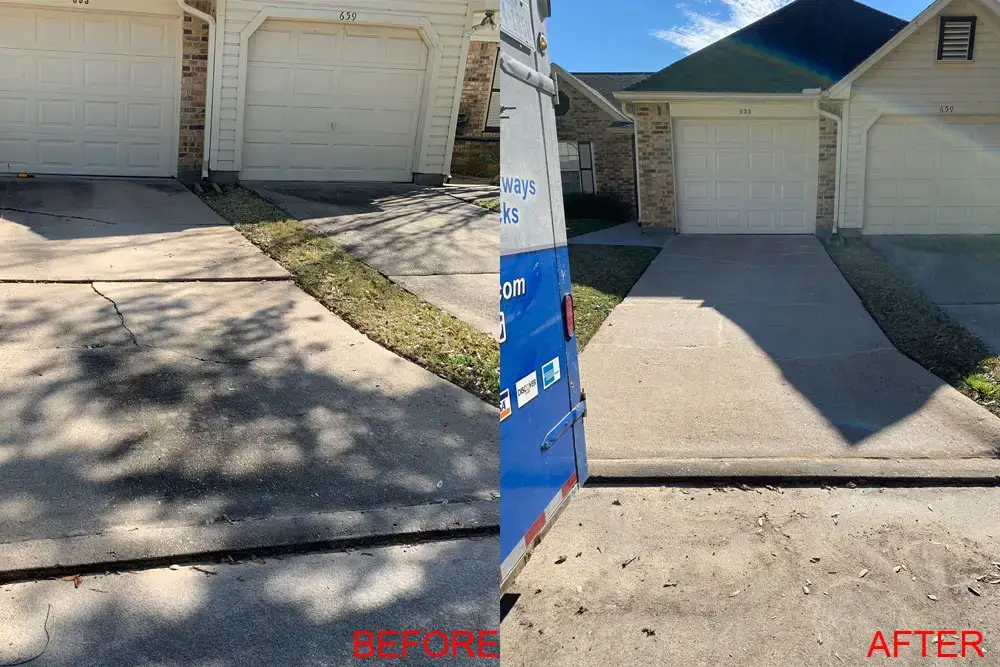
“My driveway is aging. Should I replace it or hire a concrete repair expert?”
So you noticed that the driveway is beginning to show signs of aging (aren’t we all!?!), which raises plenty of questions.
- Can I prolong the usefulness of my driveway to make it last?
- When will concrete repairs require a professional?
- How will I know to replace my driveway?
Concrete is pretty hardy and is designed to withstand weather and heavy use. Even if you see cracks, crumbling, potholes, or uneven surfaces, all is not lost! Here are some tips to help you know whether to replace your driveway or hire a concrete restoration expert.
Signs You Need Concrete Repair
Since replacing the driveway is a larger expense, repairs are always preferred. Repairs will most likely delay replacement; however, the time for concrete replacement will come. Here are six signs that your concrete driveway needs repair.
- Discoloration. Your driveway might have picked up color from the surrounding vegetation. This can be power washed and cleaned up. Your driveway might have faded over time, but no worries! This is a normal sign of fading and does not indicate a problem. If you patch the concrete, consider including a coloring agent to match the new with the old.
- Small cracks develop. Cracks should be caught when they are less than 1/4” wide and before they connect. If these cracks are not repaired, water and ice will make them deeper and wider, creating a bigger issue.
- A pothole. One pothole caught early can be repaired, preventing further damage.
- A sunken area. A common area for the sunken driveway is directly outside the garage door. This generally happens when water erodes the base under the driveway pad. If caught early, uneven driveways can be repaired.
- Crumbling edges. If the edges of your driveway pad are crumbling more than the rest of the concrete, it may indicate the edges were poured too thin. Adding concrete to the edge may prevent further damage.
- Unusual wear. If your driveway is less than 10 years old and is already cracking and sagging, repairs are needed in order to extend its life.
Leveled technicians have years of experience in successful concrete leveling of driveways. Give us a call for a driveway lifting inspection, and we can help you explore options.
Signs You Need Concrete Replacement
Unfortunately, all the skills of experienced technicians cannot turn back the clock on aging concrete driveways. A well-built and maintained driveway should last 25 years or longer; if your driveway has issues with major sagging and crumbling, it may be time to replace it.
Here are four signs the time has come to replace your driveway:
- Drainage problem. The driveway should drain water away from the garage and foundation walls. If sagging directs water toward your house instead of away from it, this is an immediate threat and needs to be corrected to prevent further damage.
- Multiple or deep potholes. One pothole can be repaired, but if it is not repaired and worsens over time, this is an indication that the entire driveway will need to be replaced. More water damage can require auto and home repairs.
- Extensive cracking. If driveway cracks begin to look like interconnected spiderwebs or grow wider every year, this might be a sign that they need replacement.
- More than 30 years. If your driveway has seen 30 years and is aging poorly, make plans to consider a replacement. Replacing a driveway is a big decision and can be a significant investment. Make repairs early to prolong usefulness and make plans for eventual replacement in advance.
Concrete Repair vs. Concrete Replacement Costs
A replacement project involves more than pouring new concrete. Concrete removal, hauling, heavy equipment, permits and curing time all add to replacement costs. Pricing is often calculated per square foot and can rise quickly when access is limited.
Concrete repair focuses on fixing the problem areas while keeping the existing concrete in place. In many scenarios this approach avoids demolition, reduces downtime and delivers a more cost effective outcome without sacrificing performance.
Deciding Whether to Repair or Replace Your Concrete Surface
Deciding whether to repair or replace your concrete surface involves a thoughtful evaluation of several key factors. First and foremost, assess the current condition of the concrete. If you’re dealing with minor issues like surface cracks or slight sinking, repair services may be sufficient. However, if the damage is extensive, with significant cracks, fissures, or severe settling, replacement might be the more suitable option.
Consider your budgetary constraints, as concrete raising is often more cost effective than a full replacement, especially since it eliminates the need for removing old material.
Lastly, contemplate your longterm needs. Concrete tends to gain strength over time, so if your existing concrete is still structurally sound, repairing and lifting the slabs might yield better results than pouring entirely new concrete.
Want to speak with an expert?
For expert advice tailored to your specific situation, contact Leveled Concrete for a free inspection. Our experienced team will assess your concrete surfaces, provide personalized recommendations, and guide you toward the best solution. Make an informed decision with the help of Leveled Concrete’s expertise…reach out today for reliable insights and a thorough evaluation of your concrete needs.
Why Concrete Leveling Often Beats Replacement
Uneven slabs are often caused by soil movement below the concrete surface, not failure of the concrete itself. Foam concrete lifting addresses this by stabilizing the base and lifting the slab back into position.
This method preserves the existing concrete slabs, avoids concrete removal and limits disruption. For many cases involving uneven surfaces, concrete slab leveling is the best way to restore function while maintaining long lasting results.
Let Us Help With Your Concrete Repair and Leveling
If you are deciding between concrete replacement and repair, a professional inspection can clarify the best choice fast. Leveled Concrete evaluates uneven surfaces, damaged concrete, underlying issues, and repair options to help homeowners choose a cost effective path.