
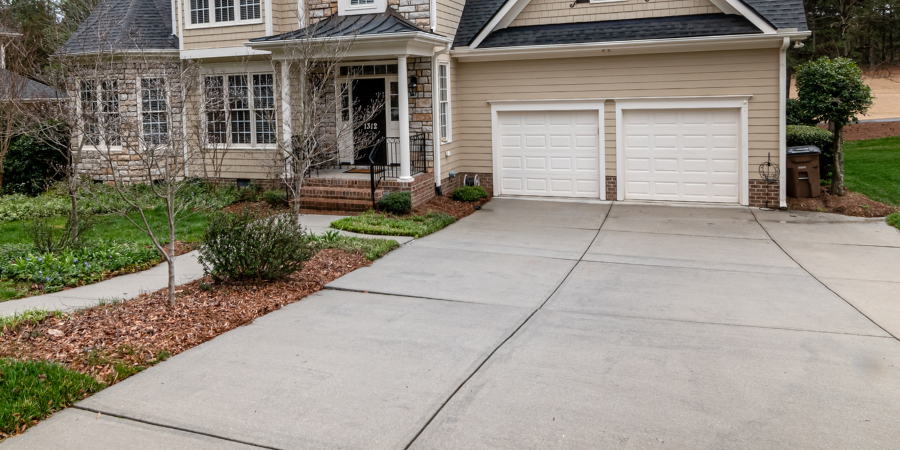
Most homeowners don’t know much about uneven driveways. They may assume replacement is the only real fix, but in many cases, the concrete itself is still usable. This guide explains what causes an uneven driveway and how to fix it (without removing and replacing the concrete!)
What Causes an Uneven Driveway?
Concrete is strong and durable, so when it becomes uneven, the issue is almost always related to what is happening below the slab, rather than the surface itself.
Here are the main culprits we see in the field when it comes to uneven driveways:
- Soil movement: Expansive clay soils (very common in the Gulf Coast area) swell when wet and shrink when dry. This constant cycle creates voids that cause the concrete to settle unevenly.
- Water erosion: Poor drainage or misplaced downspouts can wash away the supporting soil, leaving the slab suspended and prone to cracking.
- Poor compaction: If the base wasn’t packed down tightly during original construction, it will eventually compress under its own weight.
- Heavy loads: Traffic from oversized vehicles can fast-track settlement in areas where the base is already unstable.
When the ground beneath gives way, the concrete simply follows the path of least resistance!
Top 5 Signs Your Driveway Needs Repair
Most uneven driveways show clear warning signs before the problem becomes severe, so catching these early can save you big time.
- One slab sits noticeably lower than the adjacent section
- Gaps are visible beneath the concrete along edges/joints
- Water pools in certain areas after rainfall
- Cracks form near or across uneven sections
- Edges create a noticeable trip hazard when walking
Any of these sound familiar? Give us a call and we’ll help you determine the severity of your situation.
Can You Fix an Uneven Driveway without Replacing It?
Yes, in many cases you can. If the concrete slab is still structurally intact and not breaking apart into multiple pieces, lifting and stabilizing it is usually more practical than replacing it.
Concrete replacement tends to make sense only when the slab has widespread structural failure or when multiple sections have shifted in ways that cannot be corrected together.
Best Ways to Fix an Uneven Driveway
1. Improve Drainage
This is one of the most overlooked parts of the driveway repair process.
If water is still moving toward/under the driveway, lifting alone will not solve the problem long term. The source of the water needs to be corrected to protect the base.
Common fixes include:
- Extending downspouts away from the slab
- Adjusting the slope of surrounding soil
- Eliminating low areas where water collects
2. Polyurethane Foam Injection
This is the concrete leveling method we use most often because it handles both lifting and support in one step.
We start with an inspection to map out how far the slab has settled and where support is missing. Lifting one section can affect the others, so the layout and injection points are planned before drilling.
Small holes are then drilled through the concrete at those locations. A two-part polyurethane foam is injected beneath the slab. It starts as a liquid and expands as it reacts, flowing into voids and applying controlled upward pressure.
The lift is done in stages. We watch the slab as it moves and adjust during the injection to avoid overcorrecting or creating new stress points. At the same time, the foam compacts loose soil and builds a more stable base under the slab, which is what helps the repair last.
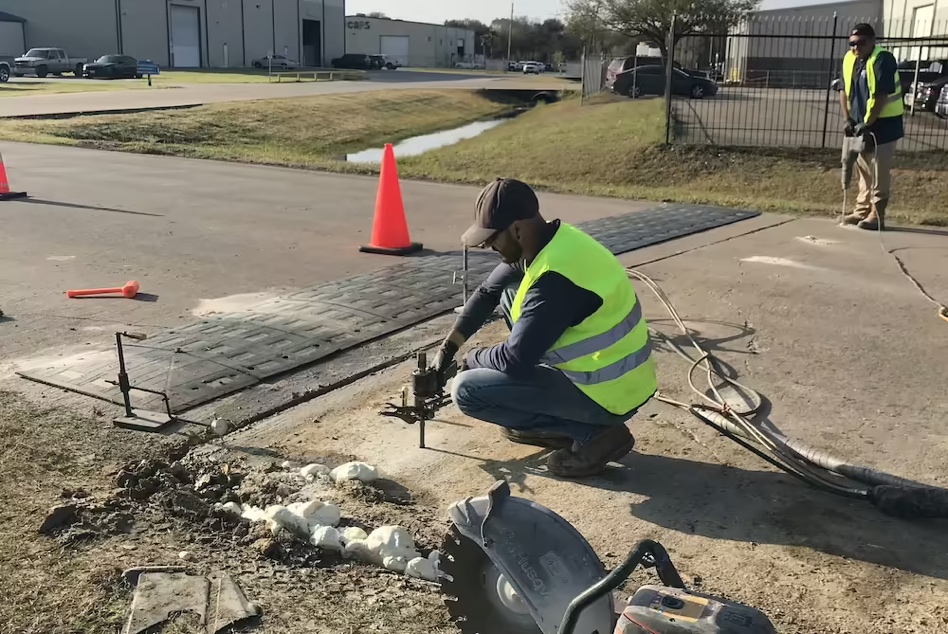
What to expect from this method:
- Lightweight material that does not add load to weak soils
- Expands into small voids that other materials may miss
- Fast cure time, often ready for use within hours
- Resists water, which helps limit future erosion
After lifting, the holes are patched and blended. They are small and do not affect use.
Long-term performance still depends on fixing what caused the concrete voids.
3. Crack Repair and Joint Sealing
Uneven driveways often have cracks, and those cracks allow water to move below the slab.
After lifting, sealing cracks and joints helps limit water intrusion and protects the repaired area. Flexible sealants are typically used so the concrete can still expand and contract without reopening the crack.
Ignoring this step can allow the same conditions that caused the settlement to continue.
4. Mudjacking (Slab Jacking)
Mudjacking works on the same general principle but uses a cement-based slurry instead of foam.
Material is pumped under the slab through drilled holes, and the pressure lifts the concrete. While this method can still be effective, the weight of the material and slower cure time can be drawbacks in certain soil conditions.
Pros:
- Can be lower cost depending on the project
- Suitable for lifting larger sections
Cons:
- Heavier material can contribute to further settlement over time
- Longer cure time before the surface can be used
- Less control during the lifting process compared to concrete leveling foam
It is still used, but many contractors have shifted toward foam for better long-term results.
Fix Your Uneven Driveway with Confidence – Leveled Concrete
Believe it or not, an uneven driveway will continue to settle if the underlying issue is not addressed. At Leveled Concrete, we lift and stabilize driveways using polyurethane foam injection. Our process is efficient and avoids the need to remove existing concrete, while also addressing the support conditions beneath it!
Schedule a free inspection with our Houston concrete leveling team to have your uneven driveway evaluated ASAP.
Related Driveway Repair Topics:
Dealing with an uneven driveway? These related article may shed some light on your situation.